



![Wired Remote Controller for Waykar AFW Crawlspace Dehumidifiers [XSB-A01]](http://www.waykar.com/cdn/shop/files/2_321b3be6-28e1-41b8-8d55-cc947f4bd452.jpg?v=1751005864&width=150)

During fall, temperatures tend to drop compared to summer. This change affects how much moisture the air can hold, which can impact indoor relative humidity levels.
As air cools, it is less able to hold water. But if the amount of water vapor in the air remains the same, its relative humidity will increase. So, cooler weather does not mean a drier basement. Besides, moisture can get into the area through other means.
In this article, we will explain why your basement still feels damp in fall and what you can do to control the moisture level and keep it dry throughout the season.
Why Your Basement Can Still Be Damp After Summer
Even though cooler air can contain less water vapor at saturation, basement humidity depends on several factors, including outdoor moisture levels, groundwater, foundation conditions, and ventilation. So, the temperature drop during fall does not mean your basement will be drier.
Moisture can get in through the foundation. Poor drainage can cause rainwater to collect around the foundation. This situation can worsen if the soil drains poorly. Water will then seep in through cracks in the walls or floors of the basement, causing dampness.
Another factor is that cool surfaces tend to condense. As fall temperatures drop, basement walls, floors, and water pipes can become colder. When moist air contacts a surface that is at dew point or below, water vapor in the air condenses into liquid, leaving the surface damp.
Lastly, ventilation can improve or worsen the problem of moisture. For example, it is better to open the basement windows when the incoming air has a lower moisture content. But if the outdoor air has higher moisture, this will only make the basement more humid.
Five Signs Your Basement Has a Moisture Problem
Instead of speculating on the moisture condition of your basement, paying attention to these 5 signs can help to determine whether or not your basement has a moisture problem.
#1 Musty Odors That Persist after Airing Out the Space
A persistent musty smell from the basement is often due to excess moisture and possible mold or mildew growth. You may notice this odor immediately after entering. If it persists even after airing out damp items in the space, you want to inspect the area for moisture sources.
#2 Condensation on Cold Pipes or Basement Windows
If you notice water droplets on pipes and windows, it means moist air is cooling against cold surfaces. You can notice this easily in fall when the temperatures drop and basement surfaces become colder.
#3 Damp Spots on Concrete Walls or Floors
Damp spots, water stains, and peeling paint may indicate moisture movement through the building's foundation. If you notice these signs, ensure it is not due to a water leakage. Otherwise, a basement dehumidifier alone will not stop such water intrusion. Instead, you must address the leak.
#4 Cardboard Boxes, Stored Clothing, or Upholstery Feeling Damp
Do stored basement belongings such as boxes or clothing become damp after a while? This could indicate a moisture problem. Often, it would accompany a musty smell. You could manage the situation by keeping belongings sealed in plastic or away from damp floor and walls. But this fix does not address the moisture problem itself.
#5 Relative Humidity That Repeatedly Stays above 60%
A hygrometer can monitor your basement's relative humidity levels over several days. Readings above 60% show that your space is at risk of mold growth, due to dampness. Ideally, we will recommend a range of 30 to 50% relative humidity.
How to Check Your Basement's Humidity in Fall
You can easily measure your basement's humidity using a digital hygrometer. A digital hygrometer measures relative humidity (RH) and temperature. Simply place one in your basement to see how humid the air is.
This step is more accurate than relying on the thermostat or humidity reading upstairs. Remember that the basement is a completely different environment. For example, it may experience cooler foundation walls and limited airflow, compared to the main building.
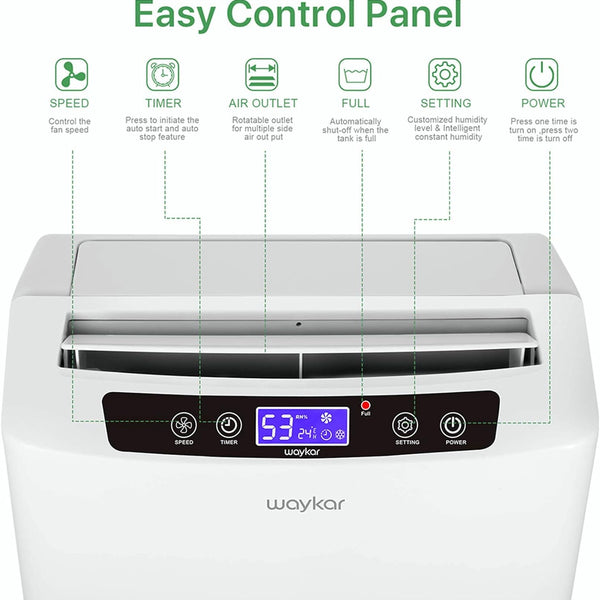
You can also turn on your dehumidifier to check the room’s humidity level on its display panel or front display window, depending on the model.

So place the hygrometer in an area that represents the state of the basement. Ideally, away from direct sunlight, heating vents, and other sources of heat or airflow that could distort the reading.
Track the readings over several days, since humidity levels are constantly fluctuating, depending on outdoor weather conditions. Noting a reading pattern can help you identify when the problem is most severe and whether your current ventilation practices are helping.
But the reading on a device cannot entirely summarize the overall moisture condition of your basement. You still have to scan for other signs of moisture. Is the basement musty-smelling and is there condensation on the windows and pipes? This added detail will help to paint the real picture of your basement's condition.
What to Do About Basement Moisture Before Winter
Fall is a good time to care for the basement moisture before winter comes. Here are a few practical steps to help keep your basement drier:
Check gutters, downspouts, and grading around the foundation. Ensure rainwater drains away from your home rather than collect around the foundation. Clear the leaves and debris from gutters to improve flow and extend downspouts to discharge water away from the house. Also, check that the ground slopes away from the foundation, especially if water is prone to gathering around the area.
Repair plumbing leaks and investigate water seepage. Check pipes and plumbing connections for leaks. Look for damp patches, cracks, water stains, or white deposits on concrete walls. A dehumidifier can remove moisture from the air, but you must fix leaks to manage the issue of basement moisture.
Improve airflow without introducing excess moisture. Better air circulation can help improve damp conditions. But just opening the basement window is not always the answer. If outdoor air has more moisture, it can condense when it meets with the cold foundation walls or floors of the basement.
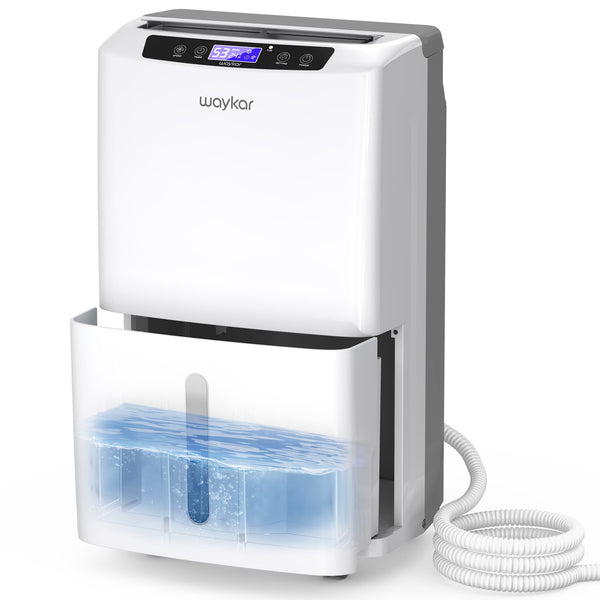
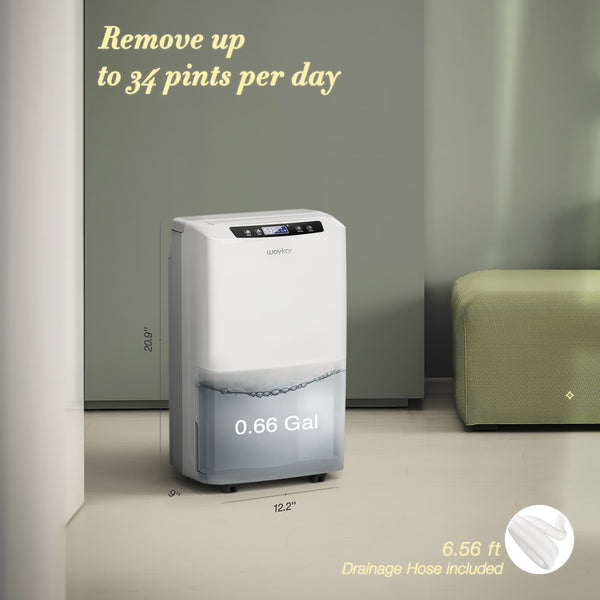
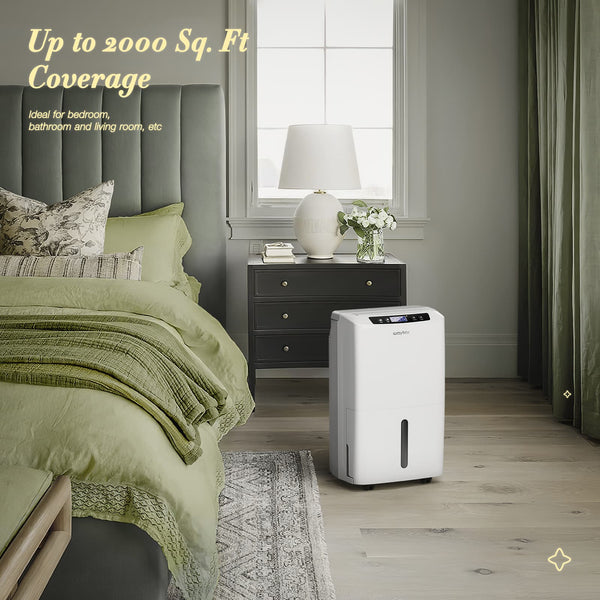
Use a dehumidifier when indoor humidity remains high. If the relative humidity readings are often above 60%, a dehumidifier can help bring moisture levels under control. Preferably, you want a reading between 30 - 50%. Remember to choose a unit based on your basement's size and moisture load. For example, a 34-pint dehumidifier will service a 2,000 sq. ft. space, but you will need a 120-pint unit for a larger 6,000 sq. ft. area.
Dry wet materials and address mold promptly. Remove standing water and dry wet carpets, cardboard, furniture, and other belongings immediately. In case of severe mold growth, you should consider hiring professional help.
Should You Run a Basement Dehumidifier All Fall?
Before deciding to run a dehumidifier all fall, you must first consider the humidity level and moisture load. Often, just turning on automatic humidity control on the device will suffice.
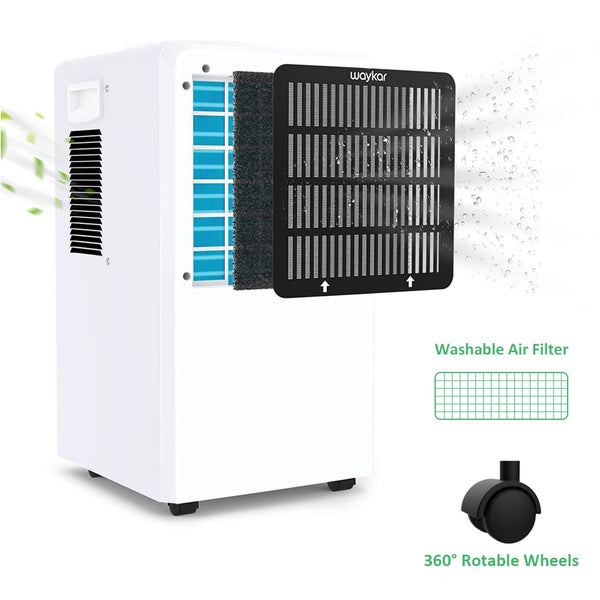
Waykar dehumidifiers for basements have this feature. It stops operation when the detected relative humidity falls 5 percentage points below the target setting. The unit resumes dehumidifying when the humidity rises 5 percentage points above the target setting.

This automatic control is both convenient and cost-effective in terms of energy management.
What Humidity Level Should a Basement Maintain?
The Environmental Protection Agency (EPA) recommends keeping indoor relative humidity below 60%, ideally between 30% and 50%. But this number is not a general guideline for every basement.
Homeowners must evaluate their specific basement condition and needs when determining an appropriate humidity level. Still, you want to avoid extremes when dealing with basement humidity.
Conclusion
Caring for your basement’s moisture condition during the fall is a great way to prepare for the winter, when high humidity can leave your space vulnerable to mold growth and damage.
The high-capacity, energy efficient Waykar dehumidifier is popular for managing basement moisture among homeowners. Remember, we offer a 30-day money back guarantee, a 2-year extended warranty, and lifetime support so you’re at peace with your purchase.
Your basement need not be damp and unlivable this fall. Caring for this less-prominent area is a great way to maintain the entire building. Enjoy free delivery when you order a Waykar unit today.